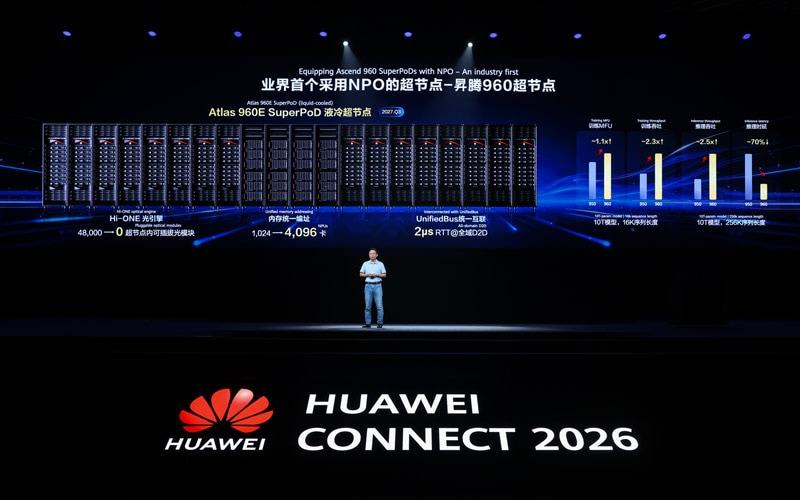
Cover: Huawei’s David Wang unveils the Atlas 960E SuperPoD at Huawei Connect in Shanghai on September 17, 2026. Photo by Huawei.
NVIDIA stopped shipping licensed Hopper chips to China. Now Washington is targeting the cloud.
On November 17, Colette Kress put a $2.4 billion business in the past tense. That’s what NVIDIA booked in licensed Hopper data-center sales to China in the quarter ended October 25. Now the company is “no longer shipping licensed Hopper data center products to China,” its interim CEO told investors. NVIDIA still forecasts $130 billion in total fourth-quarter revenue at the midpoint, with zero China data-center compute revenue in the forecast. NVIDIA’s SEC filing · Earnings call transcript
The day before, the US Commerce Department announced a separate move against the overseas data centers where Chinese firms can rent advanced computing power. The public-inspection text puts the rule’s effective date at publication, scheduled for November 19. Kress gave no reason for the shipping halt. In August, NVIDIA had already excluded China data-center compute from its forecast, then booked the $2.4 billion anyway. That’s how much room there can be between a forecast and the sales ledger. Commerce announcement · Rule text · NVIDIA’s August outlook
The $7 billion rental that vanishedThe stakes were visible before the rule landed. On November 4, the Financial Times reported that Oracle had scrapped a roughly $7 billion, five-year deal to give Tencent access to as many as 100,000 advanced chips in Southeast Asia after pressure from Washington. Under the new rule, covered exports and transfers can require a license when an overseas facility gives a China-linked customer access to large pools of advanced compute. Linked facilities can count together, and the rule gives qualifying existing arrangements a 90-day window to obtain a license. Cloud providers now have to know who’s using the machines and for what. Financial Times · Rule text
Tencent’s November 18 earnings release shows why that access matters. In the quarter through September, the company reported negative free cash flow of 69.1 billion yuan. Excluding compute prepayments, it said free cash flow would have been positive 16.9 billion yuan. Tencent said it paid ahead for capacity for its Hy models, the WorkBuddy assistant and cloud customers. Those payments predate the November rule. They show how much cash a big lab was already willing to tie up to secure machines. Tencent’s third-quarter results
Huawei gets its openingThe first squeeze is likely to come when a lab books its next big training run. A flagship model needs a large cluster that can work together for weeks. A chatbot already answering questions can keep running on equipment its operator has secured. DeepSeek has released software that serves its V4.1 Flash model on both NVIDIA and Huawei Ascend hardware. Each request served on Ascend can free NVIDIA capacity for another job. Training a new flagship end to end on a domestic cluster is a bigger engineering test. DeepSeek’s deployment notes
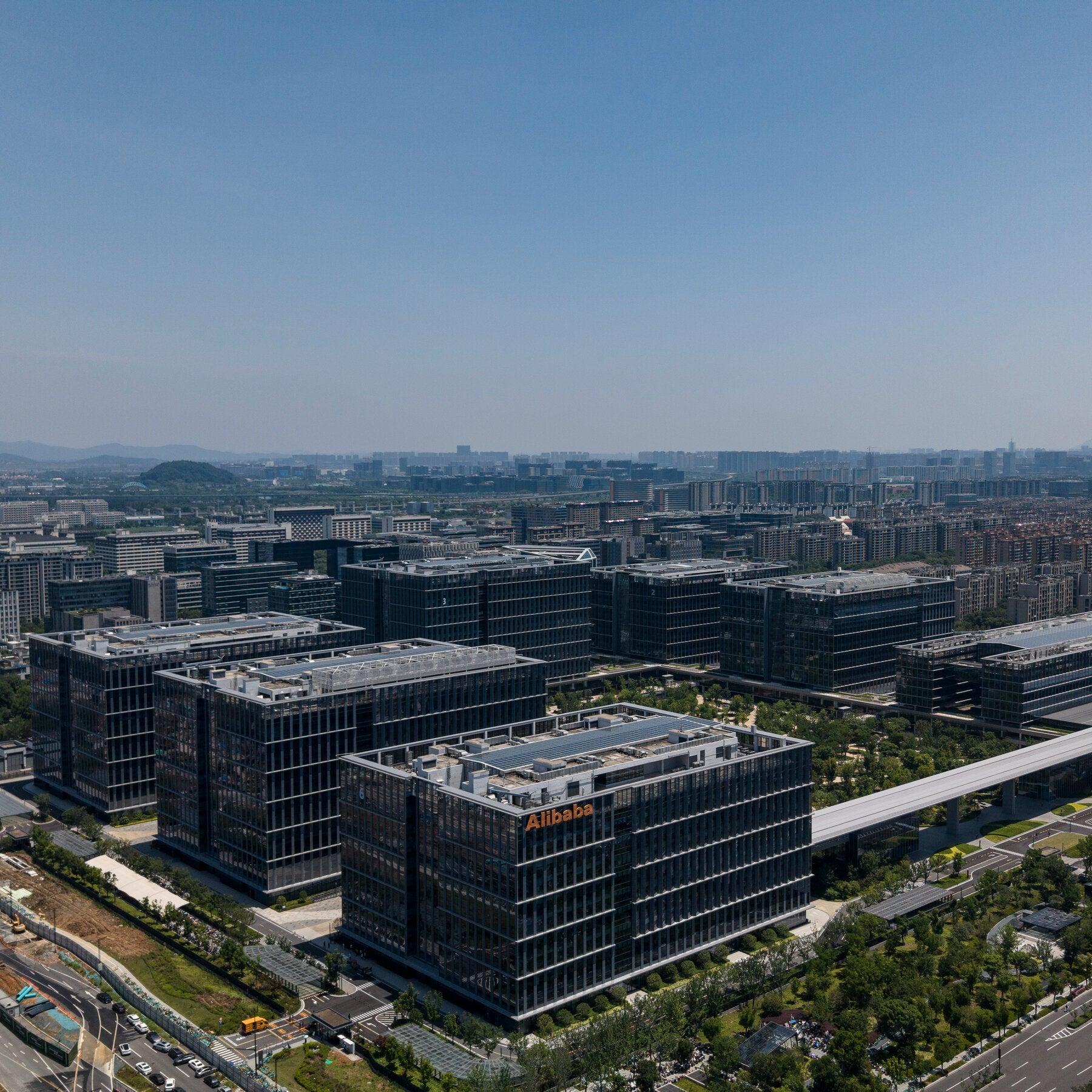
Alibaba released Qwen4-Max on November 16 and says it used 35% fewer tokens than its predecessor on the company’s own workplace benchmark at high reasoning effort. ByteDance’s Volcengine still lists the Doubao Seed family on its platform. The public releases give us a picture of products already running. The next test for both companies is how quickly they can secure capacity for their next generation, and what they’ll pay for it. Alibaba Cloud · Volcengine model notes
US cloud providers are already running newer NVIDIA systems. The company says it has begun shipping Vera Rubin racks, with systems running at CoreWeave, Google Cloud, Microsoft Azure and Oracle. For Washington, the controls can buy time if Chinese rivals have to wait longer between big experiments. For Huawei, the same delays can send customers and engineers to Ascend. At its September launch in Shanghai, Huawei showed an Atlas 960E system designed to link up to 4,096 accelerators. The result that matters will come from a lab that trains a competitive flagship on a domestic cluster, then comes back and does it again. NVIDIA’s earnings release · Huawei Connect






Checking account…
Loading comments…