
Why LeCun Takes On Amodei, Li and Hinton
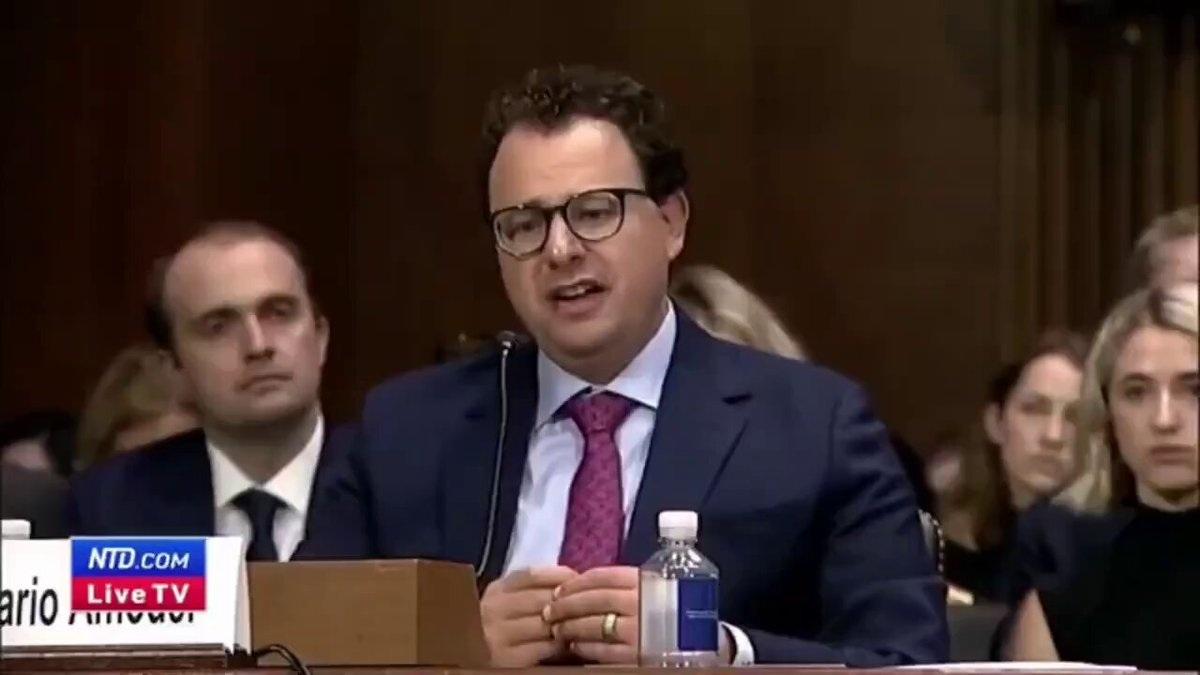
A three-year-old Senate clip set Yann LeCun off. In it, Anthropic CEO Dario Amodei explained why he wanted to keep control over who could use a powerful AI model. If someone misuses Claude, Anthropic can cut off access. Give people a copy they can run themselves, and that option disappears. On November 22, LeCun accused Amodei of wanting exactly that power. Senate hearing · LeCun’s reply
LeCun slams Amodei:
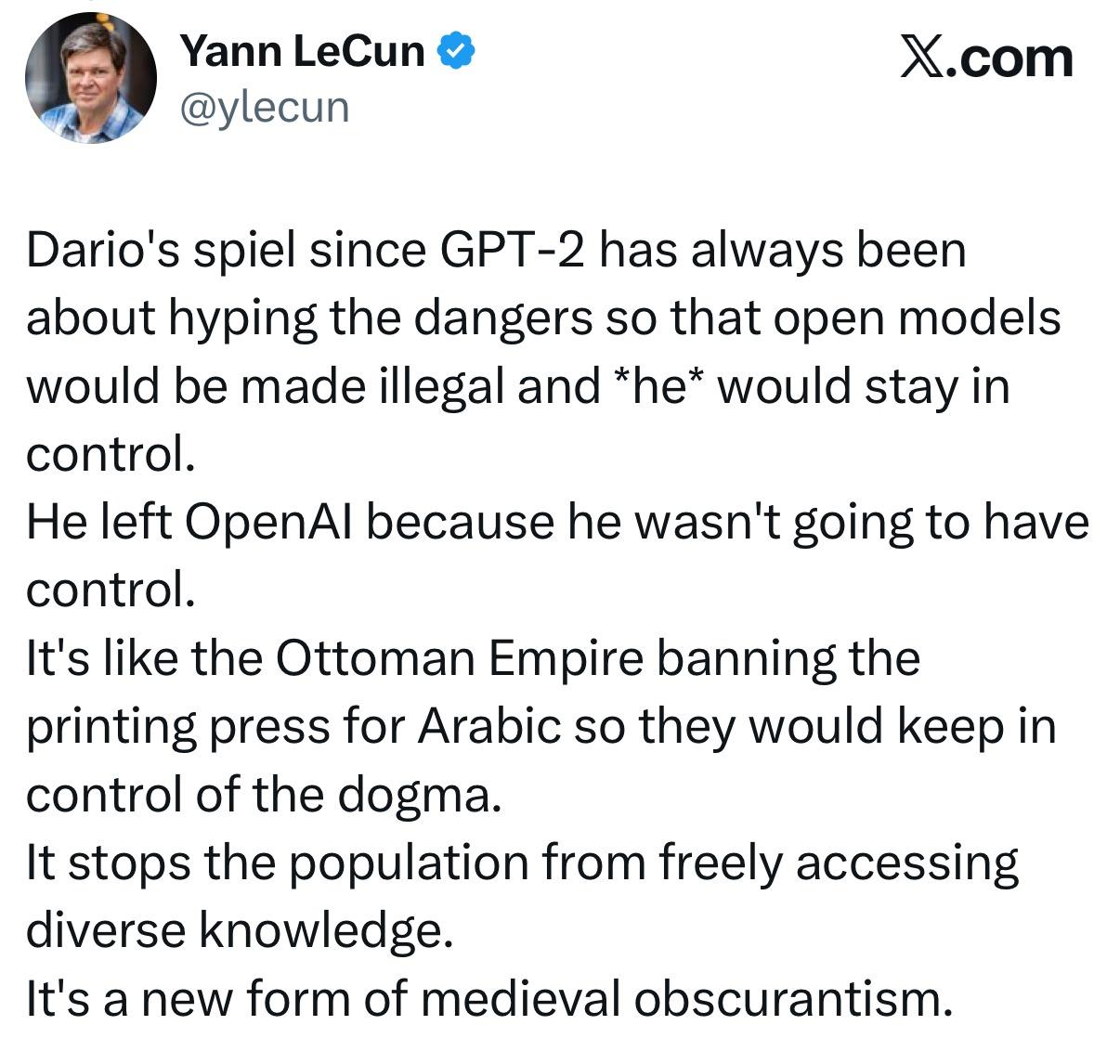
“Dario's spiel since GPT-2 has always been about hyping the dangers so that open models would be made illegal and he would stay in control. He left OpenAI because he wasn't going to have control. It's like the Ottoman Empire banning the printing press for Arabic so they would keep in control of the dogma. It stops the population from freely accessing diverse knowledge. It's a new form of medieval obscurantism.”
That’s LeCun’s account of Amodei’s motives. Anthropic’s own argument turns on a practical problem. If its safety tests miss something dangerous, it can fix the version of Claude that it runs. Who fixes the copies people have already downloaded? Anthropic’s position on open models
With Fei-Fei Li, the dispute is over what to build. Both researchers founded labs to build what they call world models. Listen to LeCun’s November 17 interview and the difference is easy to picture. Li’s team can generate a room you can walk through. Turn around and the furniture should still be where you left it. LeCun wants a robot to know what will happen if it nudges a glass toward the edge of the table. It can get the reflections wrong and still catch the glass. LeCun on Li’s work, at 18:10 · World Labs
LeCun readily conceded the value of Li’s approach for games and video. His objection was to spending computing power on every visual detail when only a few matter for the next move. His company, AMI Labs, is betting he can teach machines which details to keep. LeCun’s interview
November 2, Cambridge. Asked about Meta’s decision to release model weights, Geoffrey Hinton told an audience, “I think the weights of a big model are like fissile material.” His concern was what happens after the download. A group that could never afford to train its own model could still modify someone else’s and remove its safeguards. That is where he parts company with LeCun on open models. Watch Hinton’s answer
Geoffrey Hinton turns the argument about motives back on the lab owners. On November 13, PBS asked him about Li’s criticism of people who exaggerate AI dangers. “The people with the vested interest are the people who have AI companies,” Hinton replied. He was answering a question about Li. But his point applies just as neatly to LeCun as it does to Amodei. Both men have companies riding on their judgment. Hinton’s PBS interview
Hinton and LeCun shared a Turing Award. They’ve disagreed about AI for years. Hinton asks how humans will supervise a machine once it’s smarter than we are. LeCun sees machines that still struggle to anticipate what happens to a glass on a table. Give either man a vote on who should control AI today, and that difference matters. Hinton worries we could lose control of the machines. LeCun looks at the handful of companies that already control who gets to use them. Hinton on human control · LeCun on what machines can predict
Checking account…
Loading comments…