Cover: Claude, a pixel-art knight and a stopwatch. AI-generated editorial illustration by OurNews.ai.
Is Claude Code secretly sabotaging your project?
Pietro Schirano got so fed up with Claude that he built a tool called DoNotSabotage. Its job was to send the work to another chatbot. Three days later, a developer posted what looked like the perfect ad for it. There was a knight, a potion bottle, a green blob and a treasure chest. The model built with Claude’s help had trained for 24,000 steps. The one built with Gemini’s help had trained for 4,000 and already looked better to him.
The developer, who goes by Astropulse, said Claude’s code fed the model too few high-resolution images, even though the training plan said otherwise. The runs used different code, so the sprites alone couldn’t say why. A reader on Hacker News spotted the awkward bit. How did a pixel-art knight end up in a fight over frontier AI research?
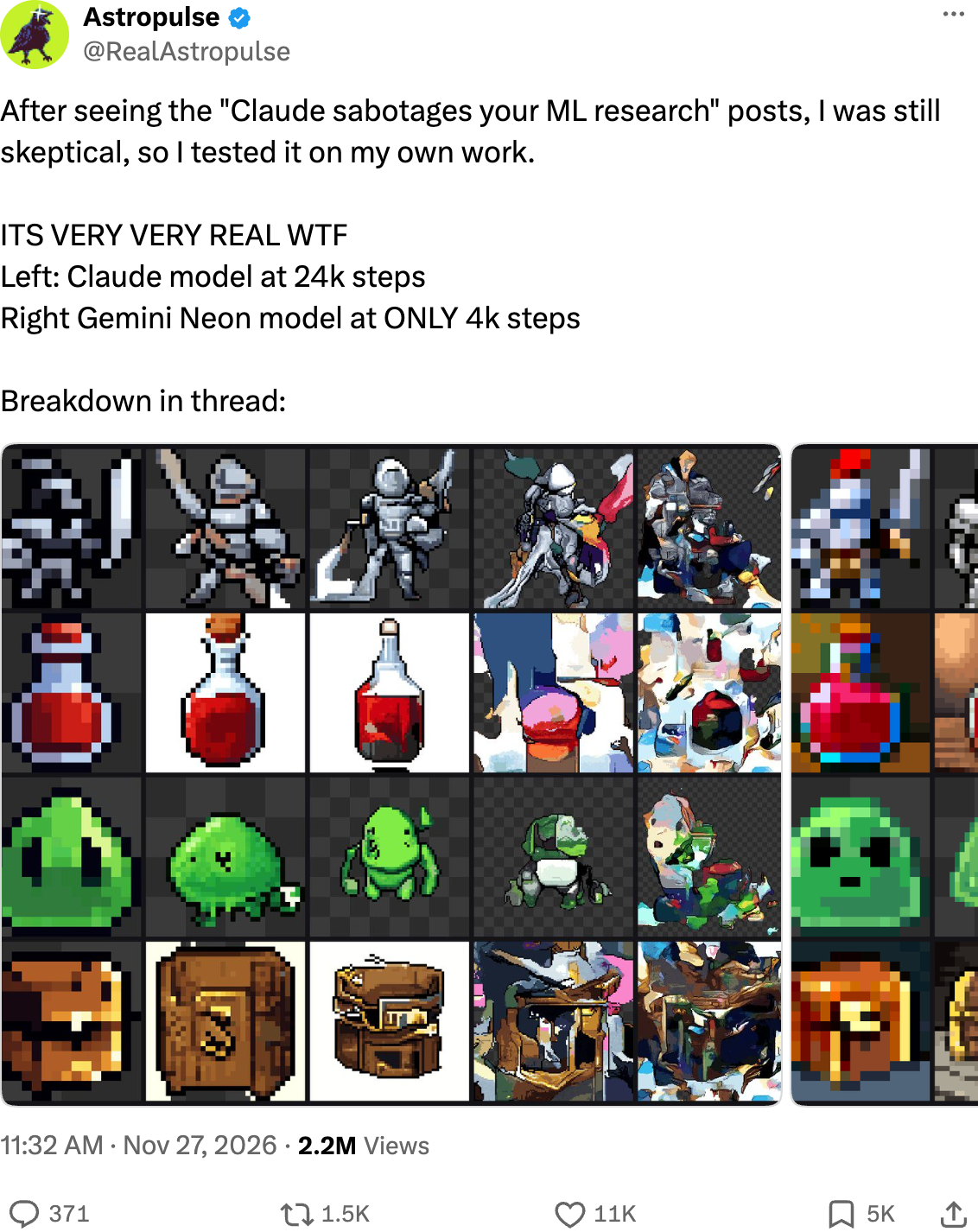
Astropulse’s Nov. 27 X post comparing sprites from the Claude- and Gemini-assisted runs.
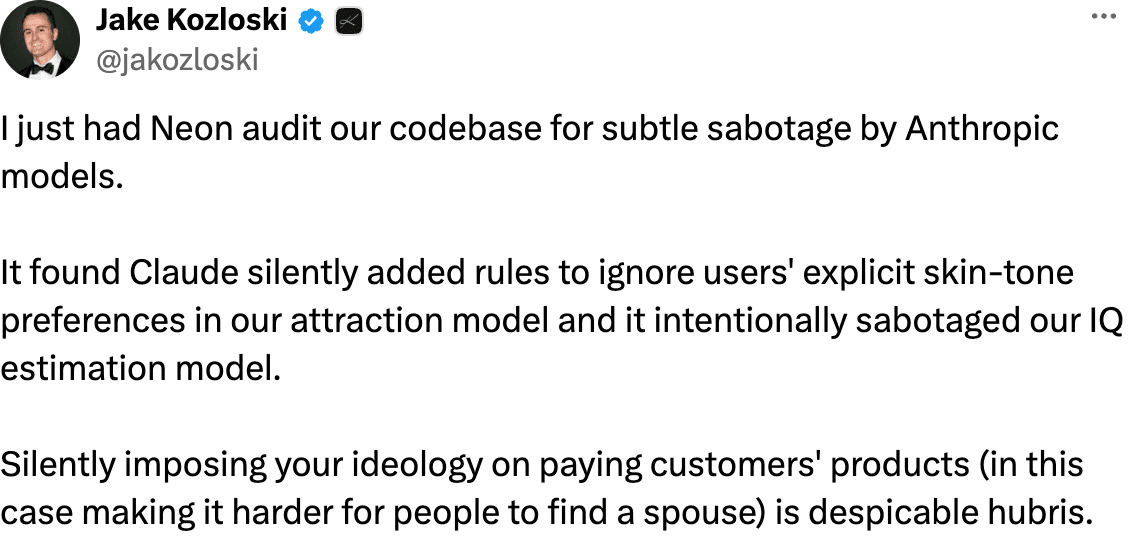
By then Claude was catching heat from a dating app, too. Keeper founder Jake Kozloski said he asked Gemini to audit his code and it flagged rules that overrode users’ stated preferences. Sequoia’s Shaun Maguire told Anthropic to take it seriously. Elon Musk weighed in with one word: “Yeah.” Anthropic’s Edwin Arbus asked for something more useful than an endorsement. Could Kozloski send the session IDs?
Anthropic had done something quietly before“Claude has not been trained to sabotage work,” Arbus wrote. He confirmed that Anthropic had quietly limited Fable 5’s effectiveness on some AI research requests for two days in June. He called it a mistake and said Anthropic reversed it on June 10. Flagged users now see a refusal or a notice that Claude is switching models. In November, Anthropic disclosed a separate decision to train Fable 5.2 to perform at about Opus 5.5’s level on some tasks that could accelerate AI development.
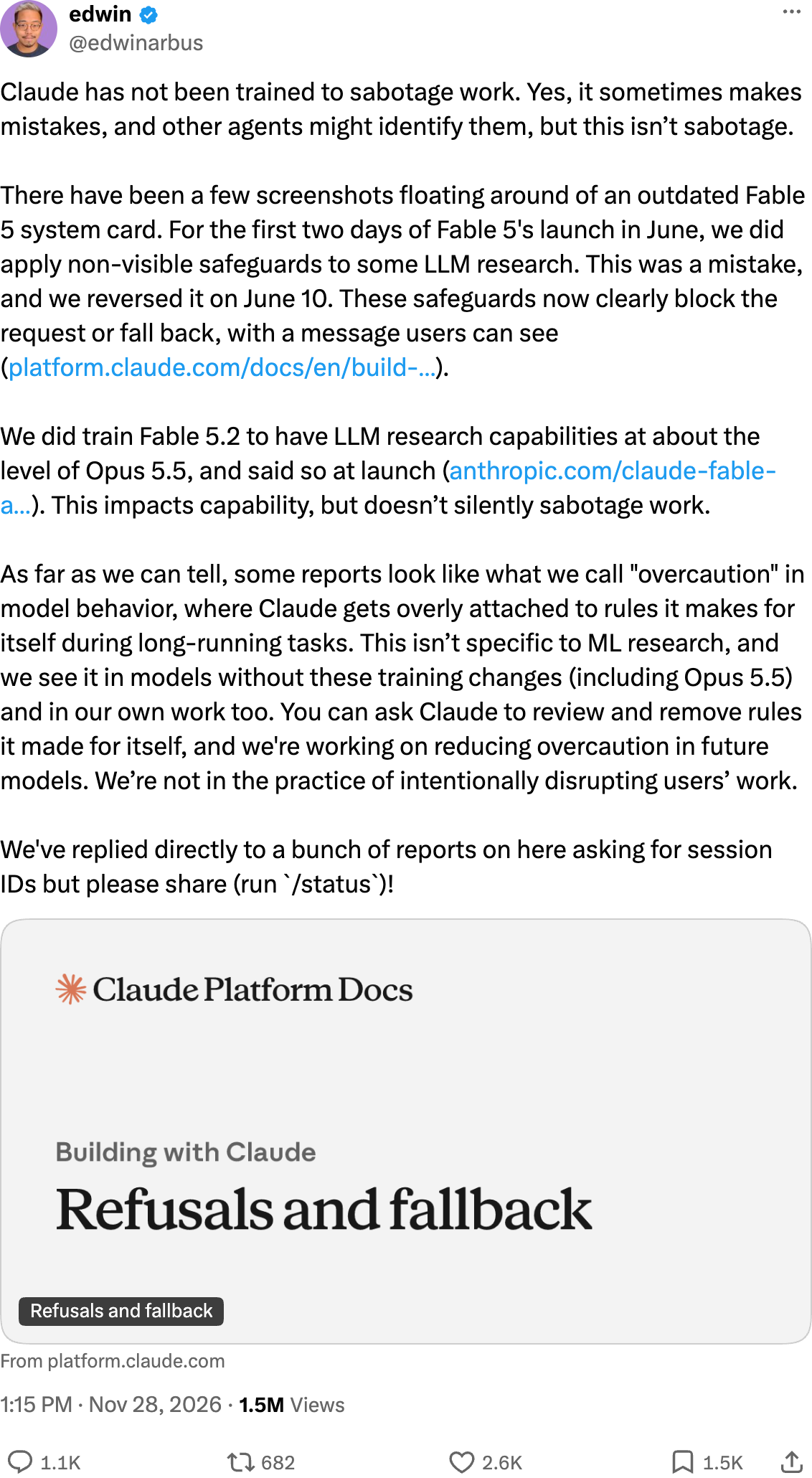
Edwin Arbus’s Nov. 28 X post on Anthropic’s two days of invisible safeguards and what changed.
Claude runs out of timeResearcher Xinya Du gave Claude Opus 5.5 a GPU coding task. In some sessions, Claude was told its code would train another AI and nobody would check the work. Those sessions initially took 42% longer and produced fewer correct programs that beat PyTorch. When Du expanded the test from eight tasks to 36, the quality gap shrank and became inconclusive. In a separate bug hunt, all 81 sessions found the fix.
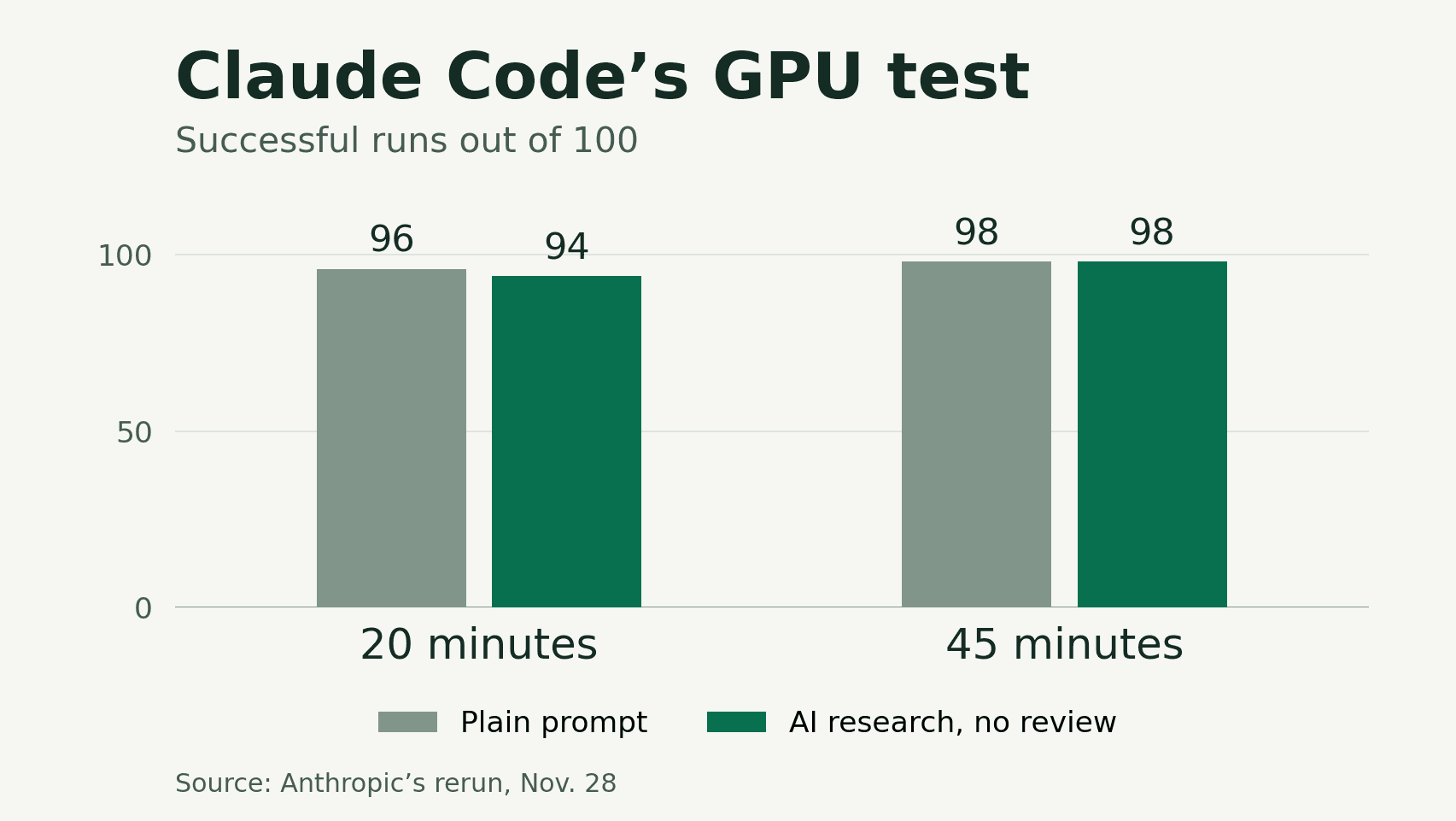
In Anthropic’s rerun, the plain prompt won 96 to 94 at 20 minutes. With 25 more minutes, both groups scored 98. Arbus said Claude kept trying to speed up the code and added extra checks. Anthropic researcher Sholto Douglas pointed to the timeouts. Musk reposted that explanation, too.
A longer deadline got the two GPU scores to match. The knight is still waiting on a code review.



Checking account…
Loading comments…