
Cover: AI-generated editorial caricature of Elon Musk and Yann LeCun arguing over orbital chip cooling.
Elon Musk vs. Yann LeCun: Can Cold Space Cool Hot AI Chips?
TL;DR Yann LeCun estimates one GPU rack in orbit would need five metric tons of radiators. Starcloud argues lighter, hotter panels can do the job. Its satellite cooled one Nvidia H100. A full rack running in orbit would put both estimates to the test.
This sounds like a pretty simple question for an undergraduate physics student. But it’s sparked a series of public spats among some very smart people.
Weeks ago, Elon Musk said it was easier to cool a data center in space. Jan Broersen, a professor of logic and AI at Utrecht University, pointed out that space is a vacuum. Musk replied: “You are fully retarded.” The exchange on X
Four days later, it was Broersen who said he owed Musk an apology. He’d assumed Musk was trying to mislead investors. Now he could see a technical point in Musk’s favor: once the heat reaches the radiator, the panel can shed it without a fan. Broersen still doubted he’d live to see data centers in orbit. Broersen’s follow-up
Then Yann LeCun joined the fight.
“Space is cold, but space is really bad at cooling things,” the AI researcher wrote on LinkedIn. He used the International Space Station’s cooling system as a benchmark, then allowed for lighter materials. Even with that allowance, he estimated that one 120-kilowatt GPU rack would need about five metric tons of radiators. Add the solar panels, the rack itself and the rest of the spacecraft, and he put the launch weight at about eight metric tons. LeCun’s original post
Starcloud CEO Philip Johnston challenged the comparison. Why use hardware designed to keep astronauts comfortable to estimate what it takes to cool a rack of chips? A purpose-built satellite, he argued, could use lighter panels and run them hotter.
Musk then commented: “I hate to say it, but Yann is just not that smart. He really isn’t.” OurNews Live, Musk’s reply
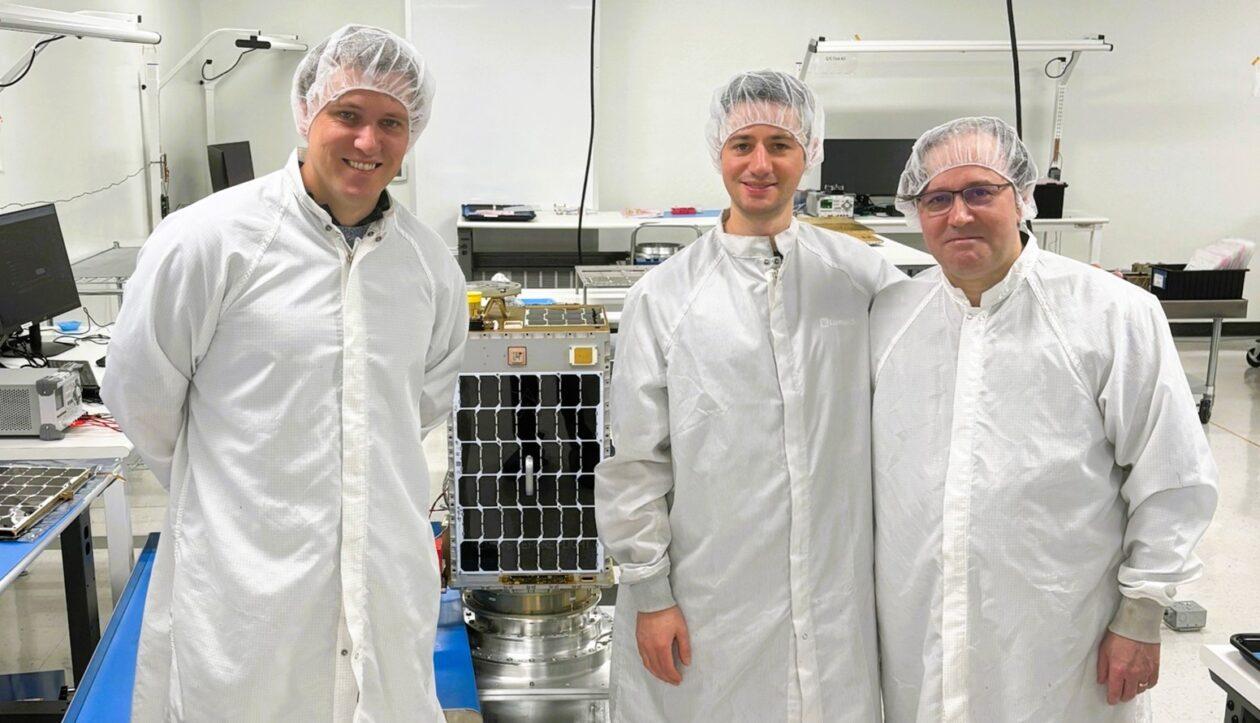
Starcloud has already done this on a small scale. On its first satellite, liquid carried heat from an Nvidia H100 to panels mounted on the outside. The panels gave off that heat as infrared radiation. The setup worked for a chip rated at 700 watts. LeCun and Johnston are arguing about what it takes to cool a rack drawing 120,000 watts. Starcloud-1
This is where Johnston’s point about temperature matters. A hotter panel can get rid of more heat from the same patch of metal, so the panel can be smaller. But the coolant has to come back cool enough to keep the chips within their operating limits. At room temperature, a November engineering roadmap estimates that shedding a megawatt of heat would take roughly 2,000 square meters of radiating surface, before allowing for any heat the panels pick up from the Sun or Earth. Space-Based Data Centers Roadmap
What would settle the five-ton argument? Run a rack at full power in orbit, then publish its temperatures and the weight of the whole cooling system, pumps and plumbing included. Starcloud has shown it can cool one chip. LeCun is betting the launch bill for cooling a whole rack will be too high.





Checking account…
Loading comments…