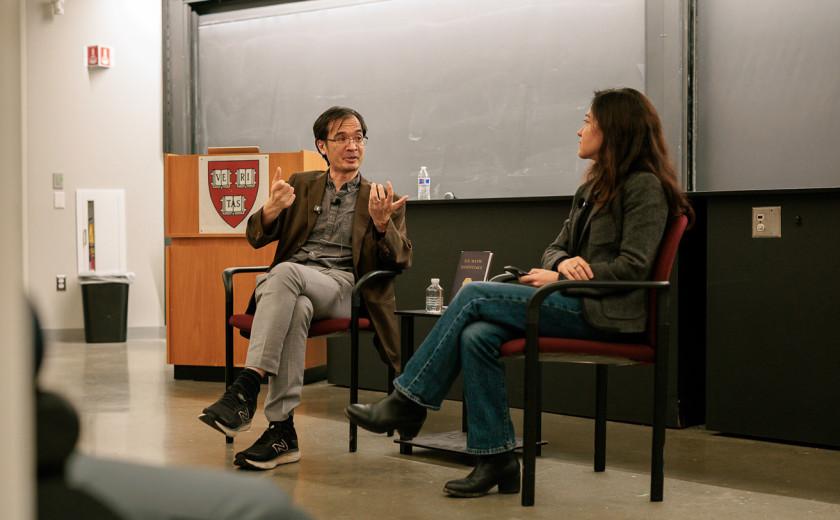
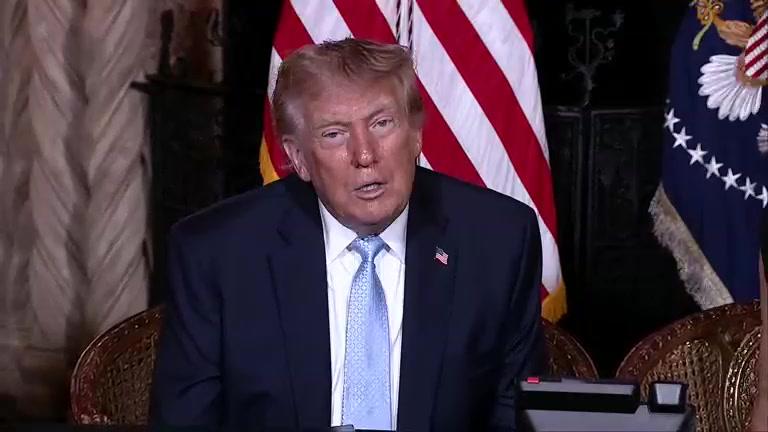
Cover: Terence Tao speaks with Lauren K. Williams at Harvard on Nov. 16, 2026. Carlos Sanchez / Harvard Faculty of Arts and Sciences.
Terence Tao’s Warning About AI Proofs Meets the Riemann Hypothesis
When Lauren K. Williams asked Terence Tao how AI labs should work with mathematicians, he reached for the example of a power plant. Once it produces “toxic nuclear waste,” he said, somebody has to decide whether to store it, release it or pay to treat it. His Harvard talk took place on Nov. 16, four days before Anthropic mathematician Levent Alpöge announced a Claude-assisted proof of the generalized Riemann hypothesis.
Tao was talking about the burden of making batches of AI-generated proofs useful. The Riemann project shows what that work looks like. OurNews Live
Seventeen million lines and a new job for mathematiciansAlpöge’s release included roughly 17.4 million lines of Lean code. The Lean and Mathlib communities said independent checkers validated the formal Riemann hypothesis proof and confirmed that its statement matched the one in Mathlib. A formal proof gives a computer precise steps to check. A readable explanation lets a mathematician see which ideas make the argument work and where else those ideas might apply.
Tao wrote on Nov. 20 that the argument appeared to draw on modern arithmetic geometry and the Langlands program. Four days later he hosted a post by Anurag Sahay, Will Sawin and Lior Silberman launching G.R.H. Polymath. The project brings together people checking, simplifying and explaining the proof so they can compare notes instead of retracing the same steps.
Pick the problems togetherAt Harvard, Tao argued that AI companies and mathematicians should choose problems together before the machines start generating proofs. An AI lab can learn from getting a model to solve thousands of problems. A mathematician may care most about one technique that explains why a whole family of problems behaves the same way.
The Riemann hypothesis concerns the zeros of the zeta function and is tied to the distribution of prime numbers. The generalized version extends the idea to a wider class of functions. The Polymath project wants to produce an account other researchers can read, teach and build on. Its first job is to identify which ideas in the formal proof deserve that treatment.

Checking account…
Loading comments…